Source Half Thread T Nut for Machinery, Chemical, and Wall Formwork
Explore 30 listings for half thread t nut options from Chinese manufacturers. Buyers can compare specifications including material grades, surface treatments, and thread sizes to find suitable fasteners for machinery, chemical industry, and wall formwork applications.
Key considerations
Products List




Comprehensive Sourcing Guide
Strategic Sourcing Guide for Half Thread T Nuts
Understanding Technical Specifications and Variability
When initiating a procurement strategy for half thread T nuts, buyers must first recognize that this fastener category is defined by a specific geometric configuration where the threaded portion extends only partway through the fastener body, leaving a smooth shank designed to sit within a T-slot. The supplied market data indicates a high degree of variability in the technical attributes available to buyers. While the core function remains consistent, the specific material composition, thread type, and manufacturing processes vary significantly across listings.
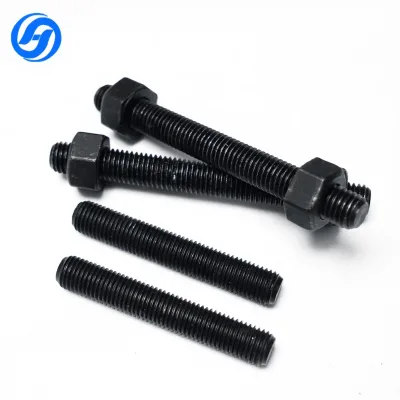
The material base for these components is predominantly carbon steel, though stainless steel and brass options are also observed in the market. The grade of the material is a critical variable; observed data points to grades such as 4 and 8, which typically correlate to specific tensile strength and hardness requirements. Buyers must verify the exact grade required for their application, as a grade 4 fastener may not suffice for high-load machinery applications compared to a grade 8 equivalent. Furthermore, the thread specification is not uniform. The market offers both half-thread and full-thread variants, with specific models labeled as "steel half thread nut" or "steel thread hex nut." The thread size range is extensive, covering metric sizes from M3 to M14 and imperial sizes including 1/4", 5/16", and 3/8".
The head style is another defining characteristic. The majority of observed products feature a round head, which is standard for T-nut applications where the head must sit flush or slightly recessed into the receiving slot. The connection method is generally described as a "common bolt" configuration, implying compatibility with standard hex bolts. However, the manufacturing method also dictates the final product quality. Two primary production methods are evident: cold heading and stamping. Cold heading is typically associated with higher strength and better grain structure alignment, while stamping may be used for specific shapes or lower-volume customizations. The surface treatment is equally diverse, with galvanized, nickel-plated, and black finishes available. The choice of finish is often driven by the operating environment; for instance, galvanized treatments are common for outdoor or corrosive environments, while black finishes may be selected for aesthetic reasons or specific chemical industry applications.
Compliance Standards and Certification Verification
Navigating the compliance landscape for half thread T nuts requires a rigorous understanding of the international standards that govern fastener dimensions and performance. The observed market data lists a wide array of standards, including DIN, GB, ANSI, JIS, GOST, and BSW. This diversity presents a challenge for buyers who must ensure that the ordered product matches the specific standard required by their engineering drawings or regulatory bodies. For example, a product listed with "DIN1624" as its model or standard refers to a specific four-prong T-nut configuration, which is distinct from a standard round-head T-nut.
Buyers must not assume that a product labeled with a standard like "DIN" automatically meets the exact dimensional tolerances of that standard without verification. The data indicates that some products are listed under "Multi-size" standards, while others are explicitly tied to specific series like "M4 M5 M6 M8 M10" or "M3-M12." This suggests that while the supplier may claim compliance with DIN or GB, the actual product might be a generic version that only loosely adheres to the dimensional requirements. To mitigate risk, procurement teams should request detailed dimensional drawings that explicitly reference the specific standard number (e.g., DIN 603 for T-nuts) rather than relying on a generic standard name.
Certification is another critical area of verification. The supplied facts mention ISO certification as a potential attribute. While this indicates that the manufacturer operates under an ISO management system, it does not automatically certify the specific batch of fasteners for a particular application. Buyers should verify if the ISO certification covers the specific manufacturing process and material traceability required for their project. Additionally, the application of these fasteners in sectors like the chemical industry or wall formwork implies that specific material certifications, such as mill test reports for carbon steel or stainless steel, are necessary to prove compliance with corrosion resistance and load-bearing requirements.
Cost Drivers and Pricing Dynamics
The pricing structure for half thread T nuts is influenced by several interconnected factors, primarily material costs, manufacturing complexity, and order volume. The observed price range in the market spans from 0 to 11.9 USD, a wide spectrum that reflects the variability in product specifications and order quantities. This range suggests that low-cost items may be basic, high-volume carbon steel nuts with simple galvanized finishes, while the upper end of the range likely includes specialized grades, stainless steel variants, or custom configurations.
Material composition is a primary cost driver. Carbon steel is generally more economical than stainless steel or brass, which are also available in the market. The choice of surface treatment also impacts cost; hot-dip galvanizing is typically more expensive than electro-galvanizing or simple black oxide finishes. The data explicitly notes that "Hot DIP Treatment" is often "No," indicating that many standard listings may not include this premium corrosion protection unless specifically requested.
Order volume plays a decisive role in the final unit price. The observed Minimum Order Quantity (MOQ) ranges from 1 to 100,000 units. This vast range allows for flexibility but also dictates the pricing strategy. Small orders near the MOQ of 1 will carry a significantly higher unit cost due to setup and handling fees. Conversely, orders approaching the 100,000-unit mark or the supplier's daily supply ability of 10,000,000 pieces will benefit from economies of scale. Buyers should note that the "Supply Ability" of 10,000,000 pieces per day indicates a high-capacity manufacturer, which is advantageous for large-scale projects but may require significant lead time planning for massive orders.
Packing methods also influence logistics costs. Options range from "Carton with Pallet" to "Ploywoven Bag, Container" or "Steel Pallet." Bulk packing in containers is generally more cost-effective for international shipping, while individual carton packing may be necessary for smaller, direct-to-site deliveries. Buyers must factor these packaging requirements into their total landed cost calculations, as specialized packing can add significant expense to the final invoice.
Typical Applications and Industry Suitability
The versatility of half thread T nuts makes them suitable for a broad spectrum of industrial applications. The supplied data highlights specific use cases, including machinery, the chemical industry, and wall formwork. In the machinery sector, these fasteners are essential for securing components to T-slotted aluminum extrusions or steel frames, allowing for adjustable positioning without the need for drilling new holes. The round head design ensures a smooth profile, preventing interference with moving parts.
In the chemical industry, the material selection becomes paramount. Carbon steel nuts with appropriate surface treatments like galvanization or nickel plating are used to resist mild corrosive environments. However, for more aggressive chemical exposures, the availability of stainless steel or brass variants becomes critical. The data mentions "steel black thread" and "steel half thread nut" in the context of chemical applications, suggesting that specific finishes are selected to match the chemical resistance requirements of the facility.
Wall formwork represents another significant application area. In construction, T-nuts are used to anchor formwork panels to steel frames, ensuring stability during the concrete pouring process. The "Four Prong T Nut" (DIN1624) is specifically noted in the data, which is a common configuration for formwork due to its ability to grip the T-slot securely under high vibration and pressure. The ability to customize the length ("According Your Require") is particularly valuable in formwork applications where varying panel thicknesses require different thread engagement depths.
The measurement system compatibility is also a key factor in application suitability. The market offers both Metric and Imperial (Inch) systems, allowing these fasteners to be used in projects adhering to different regional engineering standards. This dual-system availability ensures that half thread T nuts can be integrated into global supply chains, supporting projects in regions that use either DIN/ISO metric standards or ANSI/ASME imperial standards.
Supplier Evaluation and Operational Capabilities
Selecting the right supplier for half thread T nuts requires a thorough evaluation of their operational capabilities and geographic footprint. The data indicates that the primary origin of these products is China, with specific mentions of Jiangsu China (Mainland) as a production hub. This region is known for a dense concentration of fastener manufacturers, offering a competitive landscape but requiring careful vetting to ensure quality consistency.
Buyers should assess the supplier's production methods to ensure they align with the required product quality. The presence of both "Cold Heading" and "Stamping" methods in the data suggests that suppliers may offer different tiers of quality. Cold heading is generally preferred for high-strength applications, while stamping might be used for lighter-duty tasks. Verifying which method the supplier uses for the specific grade and size required is essential.
The supply chain resilience is another critical evaluation point. With a stated supply ability of 10,000,000 pieces per day, a supplier demonstrates significant capacity. However, buyers must confirm if this capacity is available for custom orders or if it is reserved for standard SKUs. The wide range of MOQs (1 to 100,000) suggests flexibility, but buyers should verify lead times for larger orders to ensure they can meet project deadlines. Additionally, the variety of packing options, from "Carton" to "Steel Pallet," indicates that the supplier can adapt to different logistical needs, but buyers should confirm the availability of specific packing configurations for their shipment requirements.
Quality Control and Long-Term Procurement Considerations
Ensuring the long-term reliability of half thread T nuts requires a robust quality control strategy. Buyers should implement incoming inspection protocols that verify critical attributes such as thread pitch, head diameter, and material grade. The variability in observed standards (DIN, GB, ANSI, etc.) necessitates that inspection criteria are strictly aligned with the specific standard referenced in the purchase order. For instance, a product listed as "DIN1624" must be inspected against the specific dimensional tolerances of that standard, not just a generic T-nut specification.
Material traceability is a key component of quality control. Given the mix of carbon steel, stainless steel, and brass in the market, buyers should require mill test reports (MTRs) to confirm the chemical composition and mechanical properties of the raw materials. This is particularly important for applications in the chemical industry or machinery where failure could lead to safety hazards. The presence of ISO certification in the data is a positive indicator, but it should be complemented by batch-specific testing results.
Long-term procurement considerations also involve managing the relationship with the supplier to ensure consistency. The wide range of models, from "XCL0161" to "XINCHILF," suggests that suppliers may have multiple product lines. Buyers should aim to standardize their specifications to a single model or a narrow range of models to simplify inventory management and quality assurance. Additionally, the customization options available, such as specific thread lengths and surface treatments, should be leveraged to create a standardized specification that meets all project needs without requiring frequent changes to the supply chain.
Finally, buyers should consider the total cost of ownership, which includes not just the unit price but also the cost of potential failures, replacement logistics, and downtime. Investing in higher-grade materials and more robust surface treatments may result in a higher initial unit cost but can significantly reduce long-term maintenance and replacement expenses. By carefully evaluating the technical specifications, compliance standards, and supplier capabilities, buyers can secure a reliable supply of half thread T nuts that meet the demanding requirements of modern industrial applications.
FAQs
What materials are used for half thread t nuts?
These fasteners are primarily made from carbon steel, though stainless steel and brass options exist. Buyers should verify the specific material grade, such as grade 4 or 8, to ensure it meets the required tensile strength for their machinery or chemical industry applications.
Which standards apply to half thread t nuts?
Products comply with multiple international standards including DIN, GB, ANSI, JIS, GOST, and BSW. Specific models like DIN1624 refer to four-prong configurations, while others may follow generic multi-size standards, so dimensional drawings must be checked for exact compliance.
Can I customize the length of these nuts?
Yes, customization is available for the length according to your specific requirements. This flexibility is particularly useful for wall formwork applications where varying panel thicknesses demand different thread engagement depths to ensure secure anchoring.
What surface treatments are available for these fasteners?
Common treatments include galvanization, nickel plating, and black finishes. While hot dip treatment is often not standard, galvanized options are preferred for corrosive environments, and black finishes are selected for specific chemical industry applications or aesthetic needs.
How does the manufacturing method affect quality?
Products are made using cold heading or stamping methods, with cold heading generally offering higher strength. Buyers should confirm the production method matches their grade requirements, as stamping may be used for specific shapes or lower-volume customizations.
What is the typical minimum order quantity?
The minimum order quantity ranges from 1 to 100,000 units depending on the supplier and product type. Small orders near the lower limit incur higher unit costs, while larger orders benefit from economies of scale and the supplier's high daily supply capacity.
Where are these half thread t nuts manufactured?
The primary origin is China, with specific production hubs located in Jiangsu. Buyers should verify the exact location and ensure the supplier has the necessary ISO certification to guarantee quality management and material traceability for their specific project needs.